7 Tips on Knee Replacement Advances for Buyers
Knee replacement advances are changing how patients and care teams discuss pain relief, mobility, and recovery. For buyers, however, a newer implant or surgical technique is not automatically the better choice. The details matter. A useful principle, paraphrased rather than presented as a direct quotation from orthopedic surgeon and researcher Dr. Daniel J. Berry, is: “The right choice depends on the patient, not the newest device.”
That distinction can shape every decision. Compare implant materials, surgical approaches, expected recovery, and the surgeon’s experience with each option. Ask how a proposed technique may affect your own risks and daily routines. A short walk to the mailbox, stairs at home, or kneeling in the garden can make abstract claims feel concrete. Evidence and personal fit deserve more weight than impressive product language.
This guide presents seven practical tips for evaluating Knee replacement advances. It also points out questions worth raising during a consultation, including how outcomes are measured and what follow-up care involves. Some newer options have limited long-term evidence. That matters. Technology can help, but it cannot promise a pain-free result or replace careful clinical judgment. Bring your medical history, write down your priorities, and ask for clear explanations. One honest conversation may reveal what a brochure leaves out.

Understanding Current Knee Replacement Technologies
Current knee replacement technologies differ in how surgeons plan, position, and secure the joint. Standard implants replace damaged surfaces with metal and durable plastic components. The surgeon may fix them with bone cement or use a porous surface designed for bone growth. Each method has trade-offs. Bone quality and overall health matter.
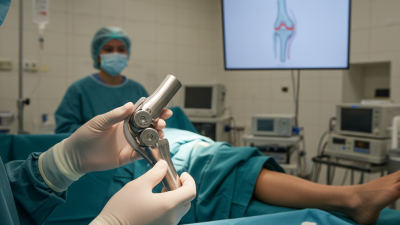
Computer-assisted planning and robotic tools can help map bone cuts and guide implant placement. They do not perform surgery independently, and accuracy does not guarantee less pain or longer implant life. Patient-specific guides may be made from imaging scans, but they are not necessary for every case. Ask what a tool changes in your operation, not just whether it is new.
Materials, implant shape, and surgical approach also vary. Some designs preserve more bone or support different ranges of motion, yet no design suits everyone. Tiny details matter. A surgeon’s training and familiarity with a chosen system can be as relevant as its features. Evidence can be difficult to compare because studies track different patients and outcomes. Ask about expected recovery, possible complications, and how long the implant data has been followed. It is reasonable to compare opinions; it is also worth admitting that no technology removes uncertainty.
Identifying Candidates and Treatment Goals
Knee replacement candidacy is not decided by an X-ray alone. The AAOS 2022 guideline addresses adults with symptomatic, moderate-to-severe knee osteoarthritis. It supports considering surgery when nonsurgical care has not provided adequate relief. Daily function matters: note pain during stairs, getting out of a chair, or walking across a car park. A scan may show damage, but it cannot describe what those tasks cost you. That distinction matters.
The AHRQ Healthcare Cost and Utilization Project recorded about 719,000 inpatient knee replacements in the United States in 2012. That figure shows how common the operation is, not whether it suits any one person. Before deciding, discuss other conditions, medication risks, mobility, and likely recovery support with a qualified clinician. Set specific goals, such as sleeping with less pain or reaching the mailbox without stopping. Some goals may be unrealistic; that deserves an honest conversation, not a sales pitch. I would also ask how success will be measured and when progress will be reviewed. Expectations are imperfect. Pain relief and improved movement are possible, but results and recovery vary.
Knee Replacement: Estimated Implant Survival Over Time
Long-term studies estimate that about 95.6% of knee replacements remain unrevised at 10 years, declining to 82.3% at 25 years. These are population estimates, not an individual forecast. Candidate decisions should consider pain, daily function, response to nonsurgical treatment, overall health, and the patient’s goals.
Source: Evans et al., The Lancet (2019), systematic review and meta-analysis of total knee replacement survival.
Comparing Implant Materials and Design Options
Tip 1: Compare the full implant system, not a single material. Metal components often use cobalt-chromium or titanium, while the surface between them commonly includes a polyethylene insert. Ceramic options may also be available.
Tip 2: Ask how each material’s wear, strength, and possible allergy concerns apply to your health history. Small details matter.
Tip 3: Compare fixation methods. Cemented implants use bone cement; cementless designs rely on bone growth against a textured surface. Bone quality and activity can affect which option a surgeon considers suitable.
Tip 4: Ask about bearing surfaces and how the moving parts meet.
Tip 5: Check the design’s stability and motion goals. A more constrained design may suit some knees, but it is not automatically better for everyone.
A neat comparison chart can mislead; materials rarely act alone.
Tip 6: Ask what evidence supports the proposed design, including follow-up length and reported revision rates. Numbers need context.
Tip 7: Discuss the surgeon’s experience with that design and how it fits your anatomy, bone health, and daily activities. A specification sheet cannot predict an individual result.
It is easy to fixate on polished material claims; that instinct deserves a second look. Bring your questions to an orthopedic specialist, and ask what trade-offs matter most in your case.
Evaluating Surgical Methods, Risks, and Recovery
Choosing knee replacement surgery means weighing the procedure, its risks, and the practical demands of recovery. A total replacement resurfaces the main knee joint, while a partial replacement treats damage limited to one area. The right option depends on the pattern of arthritis, ligament condition, overall health, and a surgeon’s assessment. Ask what findings support the recommendation, and what alternatives remain reasonable.
Surgical techniques vary, including incision placement and the use of computer guidance. Newer tools may help surgeons plan or position components, but they do not guarantee better results for every patient. Discuss infection, blood clots, stiffness, ongoing pain, and anesthesia-related risks. Personal risks can differ with medical history, medicines, smoking, and mobility. There is no universal winner. A brochure can make surgery sound tidy; recovery rarely follows a perfect chart.
Plan for practical details before scheduling. Many people use a walker at first, attend physical therapy, and manage swelling with movement, rest, and clinician-approved measures. Progress can take weeks or months, and temporary discomfort does not always signal a complication. Recovery is work. Ask how pain will be managed, when driving or work may be possible, and whom to contact if redness, fever, or sudden calf swelling develops. A specific timeline is useful, but it may need revision as healing unfolds.
Assessing Costs, Evidence, and Provider Credentials
Tip 1: Request an itemized estimate covering the surgeon, facility, anesthesia, imaging, rehabilitation, and possible complications. RAND’s 2024 Hospital Price Transparency Study found average commercial hospital prices were 254% of Medicare prices, with substantial variation. This is a broad hospital benchmark, not a knee-replacement quote. Ask what your estimate excludes. That gap matters.
Tip 2: Judge evidence by outcomes, not glossy claims. The American Joint Replacement Registry’s 2024 annual report uses real-world procedure data to track hip and knee replacement outcomes. Ask whether your surgeon reviews registry findings and can explain likely benefits, risks, and recovery for patients like you. Bring specific questions. For example, how will pain control and walking practice change during the first week?
Tip 3: Verify credentials and experience directly. Check board certification, an active medical license, and focused training in joint replacement. Ask how often the surgeon performs this operation and what their own complication and revision rates mean for your case. A high case count alone does not guarantee a better result. I’d compare answers carefully; even a confident consultation can leave details fuzzy. Get the proposed plan and costs in writing before deciding.
Related Posts
-
China Best Revision Knee Prostheses Options for Enhanced Mobility?
-
2026 Best Knee Implant Systems for Optimal Joint Replacement Solutions?
-

Top Prosthesis Fixation Methods You Should Know?
-

Top 10 Hip Implant Solutions for Global Buyers Today?
-

How to Choose Biocompatible Implant Materials for Your Medical Needs?
-

China Top 10 Minimally Invasive Arthroplasty Techniques You Should Know?