How to Choose Biocompatible Implant Materials for Your Medical Needs?
Selecting the right biocompatible implant materials is crucial for medical applications. Dr. Emily Tran, a leading expert in biomaterials, emphasizes, “The choice of materials can significantly impact patient outcomes.” This highlights the importance of understanding material properties and compatibility with the human body.
When considering biocompatible implant materials, one must evaluate various factors. These include mechanical strength, corrosion resistance, and the body’s response to the materials. Not all materials that are biocompatible work well for every patient or situation. Personalization based on patient needs is essential.
Many healthcare providers may overlook the implications of their material choices. Choosing the wrong material can lead to complications. Therefore, thorough research and expert consultation should guide every decision. Balancing proposed benefits with potential risks is a complex, yet necessary process. This diligence can enhance the safety and effectiveness of implants.

Understanding Biocompatibility: The Core Concept for Implants
Biocompatibility is a critical factor in selecting implant materials. It refers to how well a material can interact with living tissue without causing adverse reactions. An ideal implant should integrate seamlessly with bodily functions. The body’s immune response must be taken into account. A completely inert material is not always ideal. Some materials may provoke mild reactions, impacting the healing process.
When evaluating materials, scientists often conduct biocompatibility tests. These examine cellular response and tissue compatibility. Methods include in vitro studies and animal testing. The goal is to assess cytotoxicity and inflammatory response. Material degradation should also be considered. Degradation products may affect local tissues. Ensuring long-term safety is essential.
The selection process can feel overwhelming. Despite advances, not all materials are created equal. Individual patient factors play a critical role. Personal health history, lifestyle, and specific medical conditions must inform choices. Continuous research evolves the understanding of biocompatibility. Even established materials may require reevaluation. Being open to new findings is vital for better outcomes.
Types of Implant Materials: Metals, Ceramics, Polymers, and Composites
When selecting implant materials, understanding the types is crucial. Metals, such as titanium and stainless steel, are strong and durable. They resist corrosion, making them ideal for load-bearing implants. However, metal implants can cause allergic reactions in some patients.
Ceramics offer biocompatibility and aesthetic appeal. They are often used in dental implants and hip joints. These materials are hard and wear-resistant but can be brittle under stress. This fragility can lead to failure in high-load applications.
Polymers are lightweight and flexible. They often assist with soft tissue integration. Some common examples are PMMA and PEEK. While polymers can reduce stress shielding, they may not always provide the strength needed for specific applications.
Composites combine the strengths of different materials. Through proper selection of components, they can fit various medical needs.
Tips: Always consult with your healthcare provider before making a choice. Consider your lifestyle and activity level when evaluating materials. Think about the long-term implications of your implant choice.
Evaluating Biocompatibility: Key Tests and Standards to Consider
When selecting biocompatible implant materials, understanding key tests and standards is crucial. Biocompatibility ensures that the materials do not provoke adverse reactions in the body. To evaluate this, several tests are used, including cytotoxicity tests. These tests measure the toxicity of materials on cultured cells. A material that demonstrates low cytotoxicity is more likely to be safe for medical use.
Another important aspect involves the extraction testing, which checks for harmful substances. This helps predict how materials behave when in contact with bodily fluids. The ISO 10993 standard is commonly used. It encompasses a series of tests designed to assess the biological safety of medical devices. Compliance with these standards increases the credibility of the material's safety profile.
Despite these tests, challenges persist. Some materials may show acceptable results in laboratory settings yet lead to complications in real-world applications. Continuous evaluation and post-market surveillance are necessary to address these complexities. Adapting to new findings in biocompatibility research can lead to better outcomes. It reminds us that material selection is an evolving practice requiring diligent review and reflection.
Patient-Specific Factors: How Medical Needs Influence Material Choice
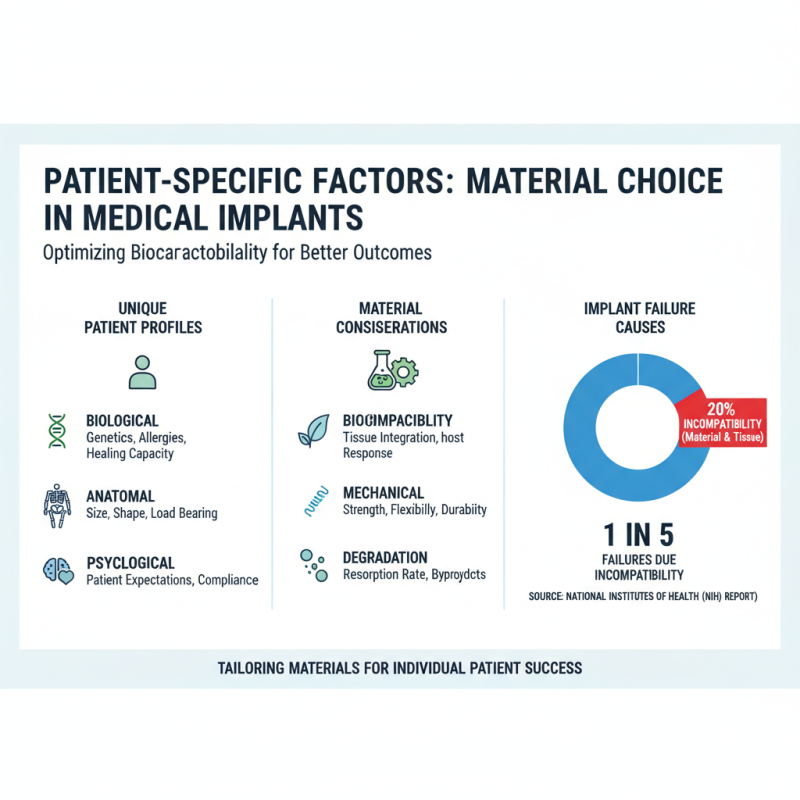
Choosing the right biocompatible implant materials is crucial for patient care. Patient-specific factors significantly impact material choices. Each individual has unique biological, anatomical, and psychological characteristics. According to a report by the National Institutes of Health, 20% of implant failures are due to incompatibility between the material and the patient’s tissue.
Material selection hinges on various factors. For instance, age can influence healing responses. Older patients may have slower recovery times, making materials with enhanced tissue integration preferable. Additionally, underlying health conditions, such as diabetes, can complicate recovery. Diabetic patients often face slower wound healing, necessitating careful consideration of implant surfaces that promote healing.
Psychological factors also play a role. A patient’s understanding of the implant and its use can affect their recovery. Patients who believe in the success of the procedure often report better outcomes. Furthermore, material safety and biocompatibility are not always clear-cut. Some materials touted as biocompatible may still trigger reactions in certain patients. Continuous research and post-implant monitoring remain essential to address these gaps and ensure optimal results.
Future Trends in Biocompatible Materials: Innovations and Research Directions
Innovations in biocompatible materials are transforming medical applications. Research indicates that materials like bioactive glasses and polycaprolactone are gaining traction. For example, a report from the Journal of Biomedical Materials Research highlights that bioactive glasses can enhance bone regeneration rates by up to 50%. This ability to support tissue integration is crucial for successful implant outcomes.
In the future, 3D printing technology will play a vital role. It allows for the creation of custom implants tailored to individual patient needs. A recent study noted that personalized implants produced via 3D printing could reduce surgical complications by 30%. However, challenges remain. Materials must balance mechanical properties with biocompatibility to avoid adverse reactions.
Tips: Always consider the long-term effects of the materials you choose. Collaborate with professionals who understand the latest research. Stay updated with industry reports to make informed decisions. As we advance, ethical considerations surrounding biocompatibility will gain importance. Reflecting on these aspects ensures better outcomes in healthcare.
Future Trends in Biocompatible Materials: Innovations and Research Directions