China Top 10 CNC Turning Service Manufacturers?
China’s CNC machining sector has become a critical sourcing base for automotive, aerospace, medical, and industrial equipment manufacturers. Grand View Research estimates that the global CNC machine market reached approximately USD 83.9 billion in 2023, with continued growth expected through 2030. This expansion increases buyer choice, but it also makes supplier evaluation more difficult.
This guide examines China’s top 10 CNC Turning Service manufacturers through practical sourcing criteria. These include machining accuracy, material capability, production capacity, quality systems, inspection equipment, lead times, and export experience. A reliable supplier should provide measurable evidence, such as CMM reports, process documentation, sample approvals, and traceable inspection records. ISO 9001 certification is useful, but certification alone does not guarantee consistent parts.
Shop-floor details matter.
A turning supplier may claim tight tolerances, yet the real question is whether those tolerances remain stable across 1,000 or 10,000 components. Equipment age, tool management, operator training, and environmental control can affect results. Reports from MarketsandMarkets also identify automation, digital manufacturing, and demand for complex precision components as major CNC industry trends. However, market reports cannot replace direct supplier verification.
This ranking should therefore be viewed as a practical starting point, not an absolute verdict. Some manufacturers may perform strongly for prototypes but struggle with mass production. Others may offer impressive equipment but communicate poorly during engineering changes. That distinction is easy to miss. By comparing capabilities, certifications, inspection practices, industries served, and customer feedback, buyers can make a more informed decision when selecting a China-based CNC Turning Service partner.
China’s CNC Turning Landscape: Tolerances Down to ±0.005 mm
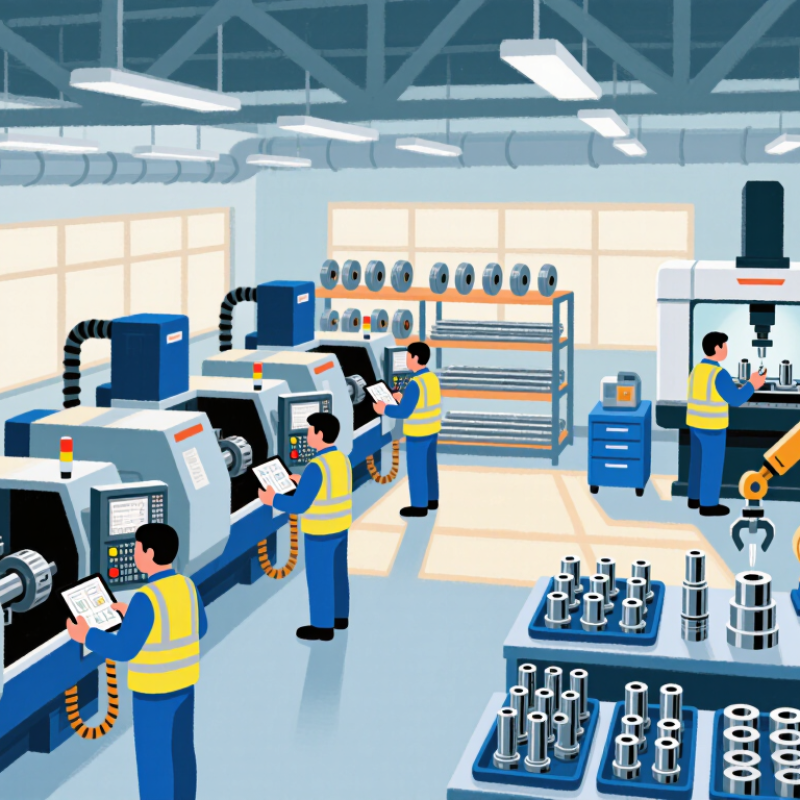
China’s CNC turning landscape now supports precision work for aerospace, medical, automation, and industrial components. Experienced manufacturers may hold tolerances down to ±0.005 mm under controlled conditions. This is not automatic. Machine condition, material behavior, tool wear, and temperature all affect the final result. A 20 mm stainless steel shaft can shift after machining because heat changes its dimensions. That detail is easy to miss.
Reliable production begins with process planning. Engineers select suitable lathes, cutting tools, workholding methods, and inspection equipment for each drawing. In-process probing can identify dimensional drift before a batch becomes unusable. Final checks may use micrometers, roundness testers, air gauges, or coordinate measuring machines. Certified calibration records improve confidence, but paperwork alone cannot replace practical inspection experience. I have seen excellent machines produce inconsistent parts when operators ignored chip buildup or thermal expansion. Precision is a process, not a setting.
Tips: Confirm whether ±0.005 mm applies to diameter, length, or total part geometry. Ask for inspection reports, material certificates, and a small trial run. Keep the drawing’s datum system clear. Also review surface roughness and concentricity requirements. Tighter tolerance often increases cycle time and cost. Sometimes, it is unnecessary. That deserves an honest discussion.
Ranking Criteria: ISO 9001, Capacity, Materials, and Lead Times
China Top 10 CNC Turning Service Manufacturers?
A credible ranking should begin with ISO 9001, but certification alone proves little. Review the certificate scope, audit date, corrective-action records, and inspection procedures. Ask whether operators follow documented work instructions during real production. Shop-floor evidence matters.
Capacity must match the buyer’s actual workload. Compare machine quantity, spindle sizes, bar-feeding systems, automation, and available inspection equipment. A factory with many machines may still lack skilled night-shift supervision. That detail is easy to miss. Check monthly output using recent, verifiable production records rather than impressive estimates.
Material capability needs equal attention. Reliable manufacturers should support common steels, stainless alloys, aluminum, brass, and engineering plastics when required. Material certificates, heat-lot tracking, and hardness reports reduce avoidable disputes. Confirm whether special alloys are processed internally or outsourced. Outsourcing is not automatically weak, but unclear control creates risk.
Lead time should be measured from drawing approval to final inspection, not from the first email. Request sample schedules for prototypes, small batches, and repeat orders. Compare promised dates with historical delivery performance. A fast quote can hide weak planning. I would also review change-control practices, packaging quality, and communication during delays. These factors reveal operational maturity better than polished photographs. The ranking should reward consistent evidence, while admitting that one factory’s strongest month cannot represent its entire performance.
Top 10 Chinese CNC Turning Manufacturers and Their Core Capabilities
China’s top 10 CNC turning manufacturers differ more by capability than by production volume. Some focus on compact brass fittings, while others machine stainless steel shafts, aluminum housings, or titanium medical components. Strong suppliers usually combine Swiss-type turning, multi-axis machining, live tooling, and automated bar feeding. Their workshops should show calibrated CMM equipment, optical inspection, and traceable material records. Real experience matters here. A polished website cannot replace stable results across repeated batches.
The leading manufacturers often support tolerances near ±0.01 mm, depending on material, geometry, and inspection method. They also manage prototypes, low-volume orders, and larger production runs. Surface finishing may include anodizing, passivation, plating, or controlled polishing through qualified partners. However, capability claims can be too broad. Ask for sample inspection reports, process-flow documents, and evidence from comparable parts. A supplier that explains limits clearly may be more reliable than one promising everything.
Tips: Define critical dimensions before requesting quotations. Send a 2D drawing with material grade, surface requirements, and acceptable tolerances. Ask how tools are monitored during long runs. Confirm whether final inspection uses calibrated equipment. Check packaging details, especially for polished or threaded parts. One overlooked issue is chip control around deep bores; it can affect cleanliness and assembly. Another is relying on one inspection sample. Repeatability deserves more attention. When comparing ten Chinese manufacturers, judge communication, corrective-action speed, and process evidence alongside price. Mistakes happen, but vague responses are harder to manage.
The chart presents representative capability coverage commonly found in Chinese CNC turning services. Values are benchmark estimates based on publicly documented machining specifications and describe service capabilities rather than individual manufacturers or brands.
Quality Standards: Cpk ≥1.33, RoHS, REACH, and Inspection Methods
When comparing China’s top CNC turning service manufacturers, quality evidence matters more than a polished website. A capable supplier should maintain a process capability index, or Cpk, of at least 1.33 for critical dimensions. This indicates stable production, but it is not a permanent guarantee. Tool wear, material variation, and operator changes can reduce capability over time. Numbers need context.
Ask for capability studies linked to actual drawings, materials, and batch sizes. A reliable manufacturer should record spindle offsets, insert changes, and in-process measurements. For a shaft with a 12.00 ± 0.02 mm diameter, inspection should show real readings, not only pass-or-fail results. Calibrated micrometers, gauges, and coordinate measuring machines support traceability. Surface finish matters. Sampling plans should match the component’s risk and production volume.
Environmental compliance also requires documented control. RoHS records should verify restricted substances in applicable materials and finishes. REACH declarations should identify relevant substances and supply-chain responsibilities. These documents need revision control and clear product coverage. A supplier may pass an audit yet still have weak reaction plans for nonconforming parts. That gap deserves attention. Practical evaluations should include first-article inspection, statistical reports, material certificates, and corrective-action records. Mistakes still happen. The stronger manufacturers disclose them, investigate root causes, and verify corrective actions before releasing production.